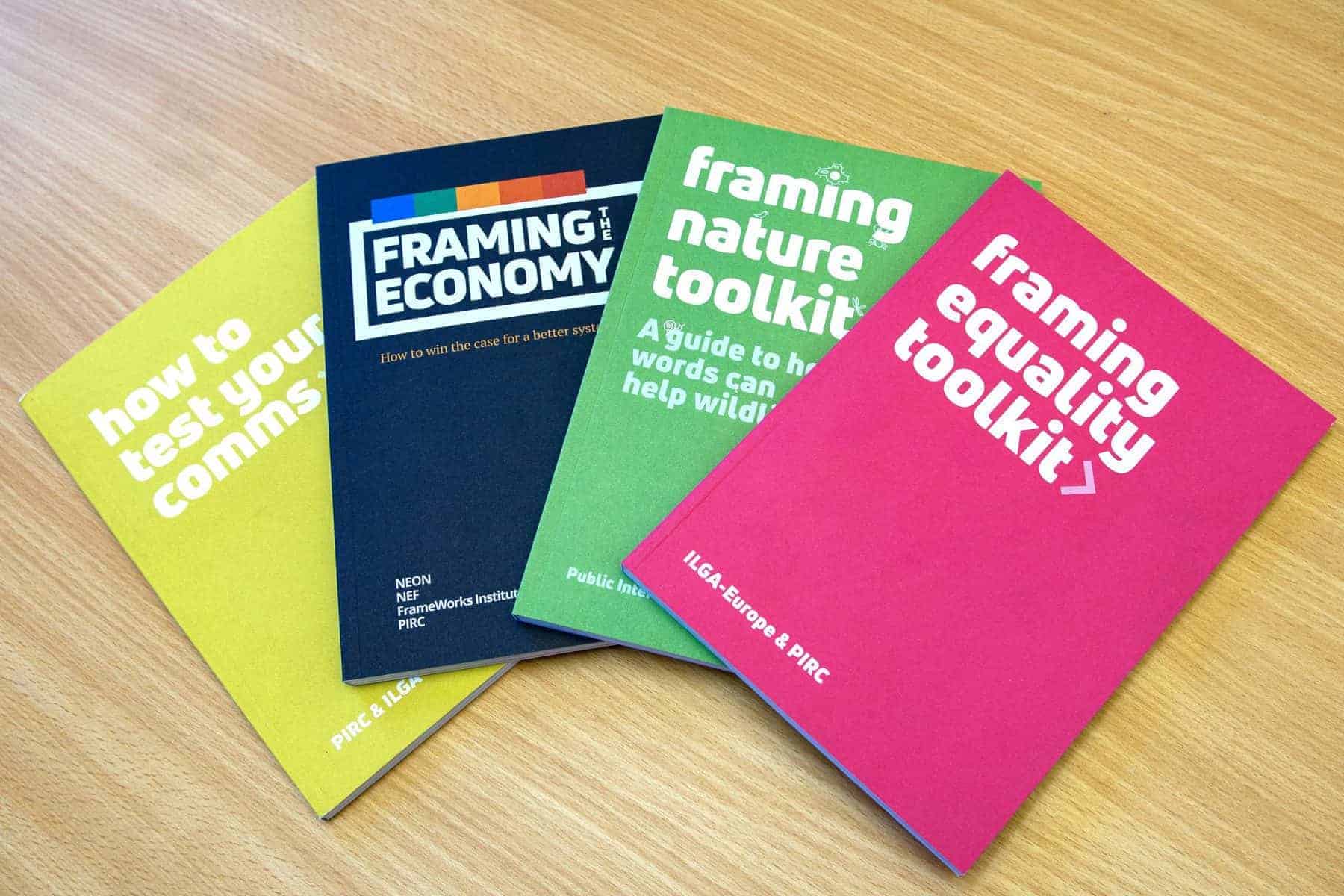
It’s been eight years since we published Framing the Economy. Back then, one participant told us:
“I think the economy is set by men in suits basically, and they will always profit from it, and profit enormously.”
This quote summarised what we heard consistently — people felt the system is rigged and they didn’t believe it could change. We published the report in 2018 to try and shift that sense of fatalism. Over the last two years, FrameWorks UK, our original partner on the mindsets side of this work, went back to see how public thinking about wealth and the economy has shifted since then.

We were reminded of this when we attended the ‘Shifting Cultural Perceptions of Our Economy’ conference, hosted by Friends Provident Foundation in York in May. Ella Saltmarshe spoke on deep narratives, the subconscious ‘soil’ beneath the surface stories we tell ourselves. Hazel Sheffield spoke about her new book Frontierlands, which documents groups reclaiming derelict land across the UK; one of them, Hastings Commons, has already moved 8,500 square metres of Hastings’ White Rock area into “custodian ownership,” turning abandoned buildings into affordable homes and workspaces held in trust rather than sold for profit.
We also attended a couple of ‘conversation corners’: one with Apolline Roger of ClientEarth and Leela Jadhav of Common Wealth who ran a session on the legal roots of how we perceive the economy, and how those roots can be rewritten. Another session by Sophie Hobson from Heard explored the role of popular culture, television and storytelling in shaping public understanding of economic issues, how narrative change can occur through entertainment and cultural representation, and how economic ideas might be embedded within stories that reach mainstream audiences. Our Framing the Economy work got a shout-out in Heard’s session, and participants asked whether framing research on the economy, like ours, needed refreshing for today’s political landscape.
The system is rigged
What did we actually find in our Framing the Economy work between 2016 – 2018, and how much of it still holds all these years later?
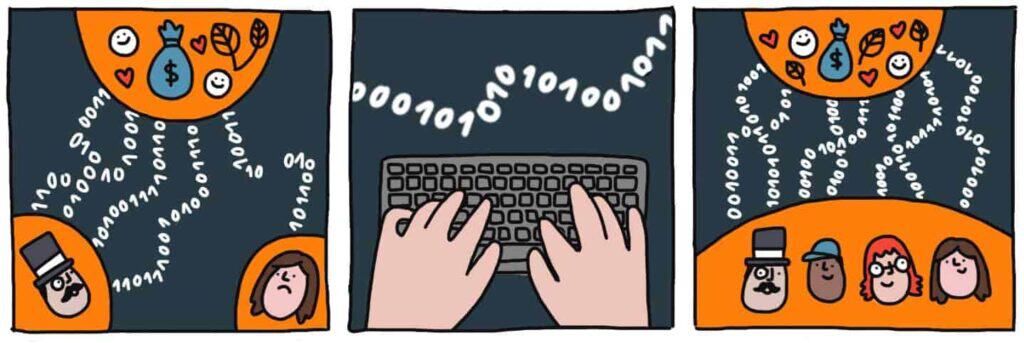
People believed that a small number of the elite ran the economy for their own benefit. One participant put it like this:
“The government aren’t working class are they, so they don’t see anything. Just make their own rules.”
Another compared the economy to a dying patient:
“I think within that time it (the economy) will implode at some point. I think it has to. It’s a system that isn’t working. It’s a system that is on life support already but being well maintained until the next big crisis. Anything could tip it over, anything. But I think it’s in such a fragile state that people are pumping money into it.”
As part of FrameWorks UK’s 2025 Moving Mindsets programme, they investigated how people think about wealth disparities in a tracking survey and a series of focus groups. They found that the feeling that the system is rigged is still widespread, and cuts across party lines, held strongly by people intending to vote across the political spectrum. What has changed is the question underneath it — not whether the system is rigged, but who is rigging it, how, and who is accountable.
Compared to 2017, more of us recognise the role of systems and institutions in shaping our economy — and who financially benefits from it. As identified in our report, Moving Mindsets (2025), the idea that our economy is shaped by laws and policies is no longer a contested one: it is mainstream.”
Frameworks UK
They identified two newer mindsets: we are increasingly critical of extreme wealth and there is broad support for sharing the wealth. A majority of people across FrameWorks UK’s tracking survey supported a one-off wealth tax on assets of over £10 million, with support highest among Labour voters (75% of respondents) and in Scotland and Northern Ireland (79% of respondents) as of August 2024.
Naming the problem isn’t enough on its own. FrameWorks UK notes that simply asserting that the system is rigged, without explaining how, leaves a gap. As they put it:
“without an explanation of who is rigging the system and how, ‘system is rigged’ leaves room for people to turn to racist and xenophobic conspiracy theories — and blame minoritised groups for manipulating financial systems at the expense of ‘ordinary people’.”
What that looks like in practice
A few live examples show what filling that gap actually looks like.
New York’s Mayor Zohran Mamdani inherited a $12 billion budget deficit and campaigned on taxing the rich to address it, including a proposed income tax rise on earners above $1 million and a corporate tax hike, both of which were blocked by Governor Hochul. The budget deficit has been closed anyway, through savings, state aid and pensions-related measures. Working with the governor, he secured New York State’s first ever pied-à-terre tax (an annual surcharge on second homes worth $5 million or more, aimed at wealthy absentee owners) is expected to raise $500 million a year. They have also launched the first phase of a free childcare initiative for two-year-olds in New York City, with the city driving implementation and the state providing funding for the initial rollout.
“I always said that I believed in the importance of taxing the rich… this is taxing the rich.”
Mayor Zohran Mamdani
Closer to home, London Mayor Sadiq Khan blocked a £50 million Metropolitan Police contract with Palantir (the US data firm which already holds over £600 million in other UK public contracts) after officials said procurement rules had been seriously breached.
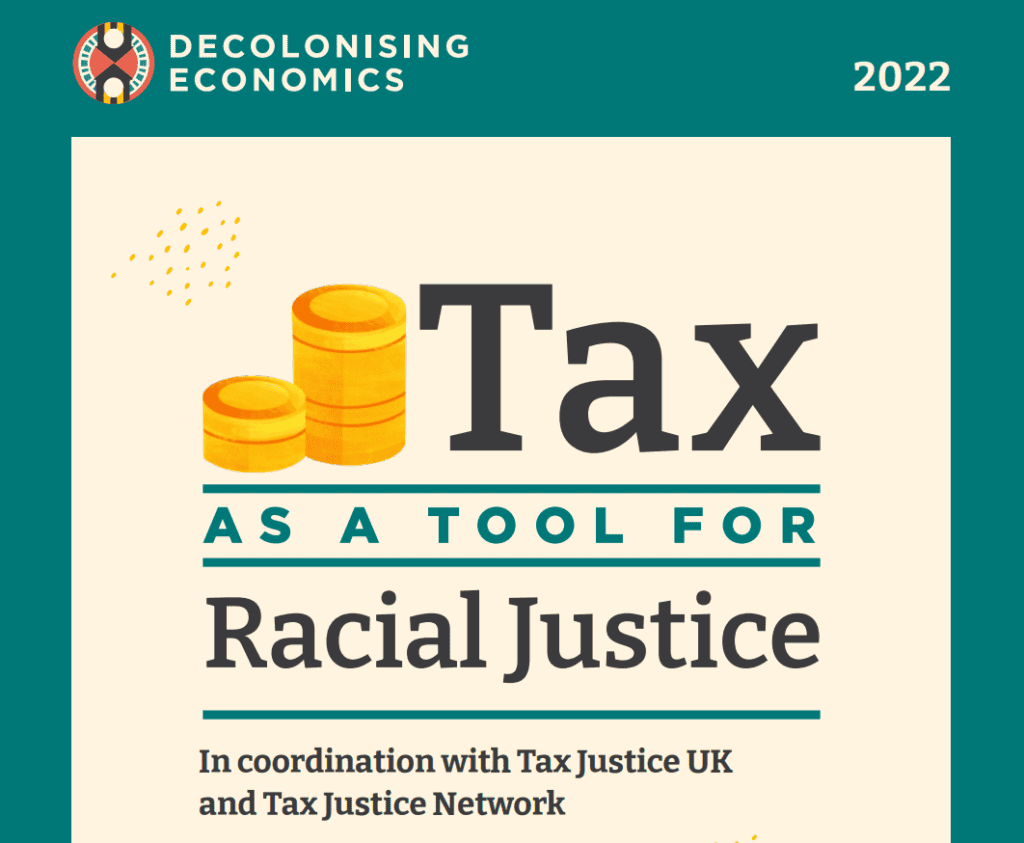
In 2022, Tax Justice UK partnered with Decolonising Economics on a report—Tax as a Tool for Racial Justice—tracing how today’s tax system inherited and preserves a racial wealth gap built under empire. They both argued that tax policy can be used to reduce entrenched inequality. Tax Justice UK’s latest blog calculates that more than £50 billion a year could be made from ten reforms, including a 2% wealth tax on assets over £10 million.
Framing the Economy sketched out a narrative idea called ‘Democratic Design for the Common Good’, and the examples above show what it could look like in practice.
We can act collectively to spread power more widely in our economy: key decisions about how the economy works can be taken democratically for the common good. E.g. via: greater public ownership, more public investment, greater role for democratic governments (local and national) in constraining markets through laws and regulation, devolving power to local communities.
Framing the Economy (see Appendix 1)
The story isn’t enough
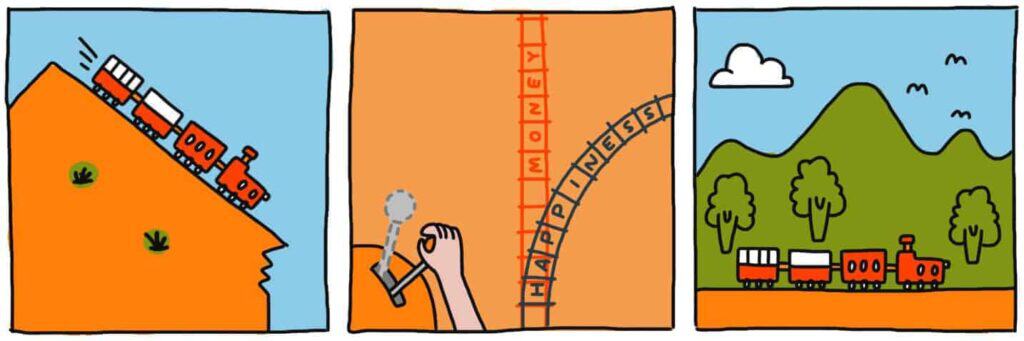
The conference in York reminded us that getting the story right is only half the job. The other half, which we wrote about at length in our original report, is building the infrastructure to tell it: training spokespeople, coordinating messaging, and building a genuine connection to lived experience rather than just data. The Poverty Truth Network’s Poverty Truth Commissions embody what it looks like to design with people who have lived experience of economic precarity at the centre. At the conference, Claire Brown and Kate Parkin shared that “everything needs to change”, and that the change needs to be built on “empathy, strong relationships and collective wellbeing”.
Underneath the idea that the system is rigged is a deeper, more insidious ‘deep narrative’, as Ella Saltmarshe put it. Shifting a specific belief, like “the economy is designed, not natural,” is real progress. But if the soil underneath hasn’t moved, if people still assume, at a deeper level, that wealth reflects worth (individualism, human exceptionalism and whether success/merit reflects work put in), new stories can struggle to take root, or wash away when the political weather changes.
Eight years on, the fatalism we found in the original report hasn’t gone, but people now increasingly understand that the economy isn’t run by a few shadowy figures pulling strings – it’s a product of human design, shaped by systems, laws and institutions that can be named and changed.
Our work now is building the infrastructure to help shift narratives, and we’re excited to keep at it.
Here are some ways you can join in:
- Explore the wealth of framing and narrative resources below
- Train as a spokesperson with NEON — they train campaigners to represent progressive causes on broadcast media. Training is free for grassroots and unpaid organisers, with a sliding scale for funded organisations.
- Get support telling your story. Heard works with people with direct lived experience to help them engage with the media on their own terms. They also offer bespoke training and workshops on request for charities and campaigners.
- Join up with other folks and groups working on the issues you care about to coordinate your efforts together and make sure you’re not pulling in different directions.
- Book a 1-2-1 chat with Hannah at PIRC to troubleshoot any blocks, challenges or questions you’re holding in your narrative change work
Framing the Economy was a collaboration between PIRC, the New Economics Foundation, the New Economy Organisers Network and the FrameWorks Institute (now FrameWorks UK), and shaped throughout by a brilliant network of 50 practitioners and an Advisory Group whose details are in the original report.
Resources
- Framing the Economy report
- FrameWorks UK’s Moving Mindsets report
- FrameWorks UK’s wealth inequality briefing
- Tax as a Tool for Racial Justice — Decolonising Economics, Tax Justice UK and Tax Justice Network
- Why Community Resourcing Is a Tool for Liberation — Decolonising Economics